Pacaya Volcano Sunset, Night Hike, and Lava Pizza Guide
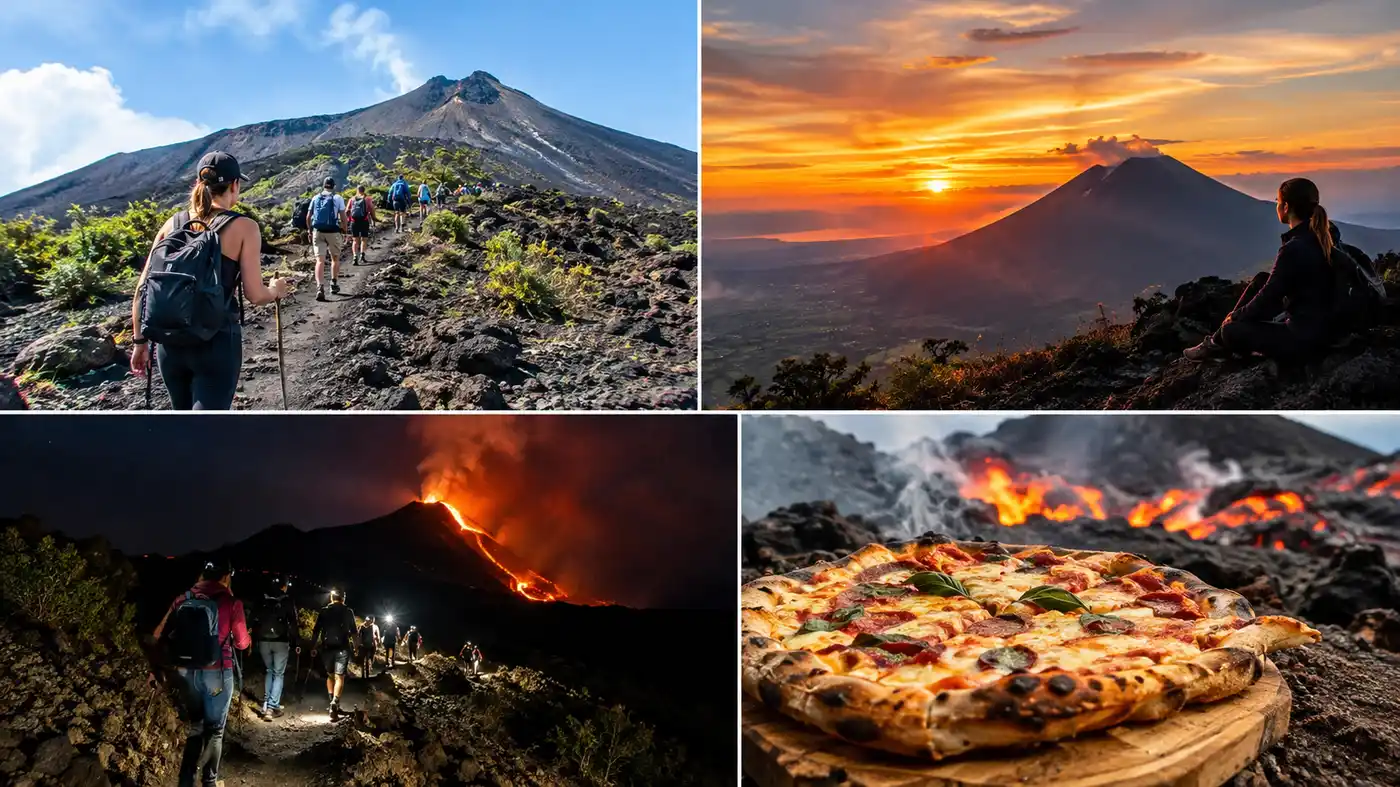
Standing on a field of jagged black basalt while the sky turns bruised violet is something you do not forget quickly. If you time the ascent right, taking a pacaya volcano sunset hike lets you skip the baking midday heat and watch the shadows of Agua and Fuego stretch thirty miles across southern Guatemala. The air gets thin and sharp as the sun dips below the cloud line, and the warmth radiating up through your boot soles reminds you that the ground beneath your feet is very much alive.
Most travelers book the standard morning bus from Antigua. They sweat through two hours of dusty switchbacks, roast a store-bought marshmallow over a crack in the rock, and get shuttled back to town in time for lunch. It works, sure. An afternoon departure changes the entire character of the mountain. You trade harsh noon glare for glowing volcanic plateaus, dine on freshly baked crusts melted over geothermal steam vents, and scramble back down through volcanic sand in the pitch black with only a headlamp cutting through the dust.
Book your pacaya volcano hike experience:
Why the Pacaya Volcano Sunset Hike Outshines the Morning Rush
The midday sun on Pacaya can be brutal. The lower third of the trail winds through shaded farmland, but once you clear the tree line, you are entirely exposed on dark volcanic earth that soaks up heat like an iron skillet. Hiking in the early afternoon means the hardest uphill section happens while the sun drops behind the ridge. By the time you reach the plateau of the 2021 lava flows, the ambient temperature drops fast, trading sweaty exhaustion for crisp mountain air.
Antigua tour agencies typically load their afternoon vans around 1:30 or 2:00 PM. The drive out toward San Vicente Pacaya winds through small agricultural villages, climbing roughly 30 miles south of the city before hitting the park entrance. When evaluating the overall Pacaya volcano hike difficulty, the sunset schedule softens the blow of that 1,200-foot elevation gain simply because you are not fighting midday heat exhaustion.
Photographers get the obvious win here. Morning hikes often battle thick valley haze or harsh shadows, whereas the golden hour at 8,000 feet turns the surrounding caldera into an unreal landscape of ochre, copper, and charcoal. On clear evenings, you can look straight west toward Volcan de Fuego, watching its summit spit dark gray ash plumes against an orange and pink horizon.
Pro tip: Bring a clean lens cloth sealed in a zip-top bag. The fine volcanic dust kicked up by afternoon hikers will coat your camera lens before the sun even dips below the horizon.
Then there is the sheer drop in trail traffic. Pacaya receives hundreds of day-trippers every week. By 4:30 PM, almost every large tour group has boarded their minibuses to head back to Antigua, leaving the upper plateau surprisingly empty. You can sit on a slab of hardened lava, listen to the wind whistle through dried scoria, and actually hear the earth hiss.
The Reality of Lava Pizza: Dining on David Garcia's Thermal Vents
Almost everyone has seen the viral clips of a guy in an apron sliding a metal pizza pan into an open crevice of glowing red magma. That man is David Garcia, an accountant turned volcanic chef who launched Pizza Pacaya back in 2019. It sounds like a pure tourist gimmick until you are standing on a freezing ridge, smelling toasted yeast and melting cheese carried on a plume of sulfurous steam.
A common misconception centers around the lava itself. Travelers often arrive expecting to poke dough directly into a flowing orange river. Pacaya is highly active, but surface molten flows change constantly. Following the major eruptions in early 2021, the mountain shifted its behavior. There are rarely open rivers of liquid rock sitting accessible on the tourist trail today. Instead, Chef David uses thermal vents - pockets where underground heat trapped inside recent basalt flows reaches blistering temperatures over 400 degrees Celsius.
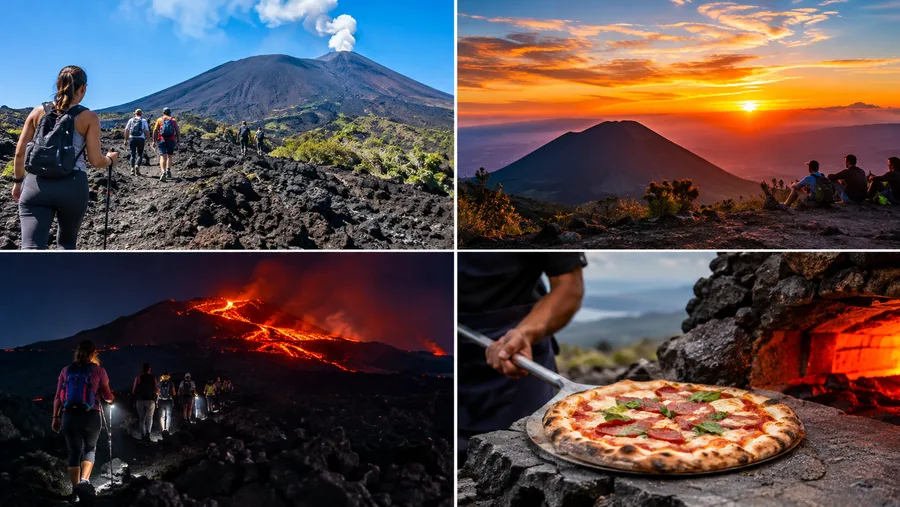
The operation is fascinating in its simplicity. David hikes up with pre-made dough, containers of fresh sauce, cured meats, and thick cheeses packed into thermal containers. He shapes the crust directly onto custom heavy-gauge aluminum baking pans, tops it generously, and slides it into a fissure in the rock. The ambient heat cooks a pie in about three to four minutes, crisping the bottom to a charred perfection that rivals any wood-fired oven in Naples.
Getting a fresh pie on a pacaya volcano hike pizza run requires prior planning. David is not sitting up on the mountain every single day waiting on chance foot traffic. Most travelers arrange the pizza through their tour operator beforehand, or message David's project directly on social channels a couple of days in advance. A large pizza costs roughly Q350 to Q400, which works out to around $45 or $50. Split between three or four hikers, it is easily the most memorable meal you will have in Central America.
If you skip the pizza, you will not starve. Almost every local guide carries a bag of pink-and-white marshmallows along with thin wooden skewers cut from local brush. Kneeling down next to a glowing vent, you stick your marshmallow into the crack and pull it out blistered and gooey in less than twenty seconds. It is a sweet, simple tradition that has taken place on this volcano for decades.
Descending into the Dark: The Pacaya Volcano Night Hike
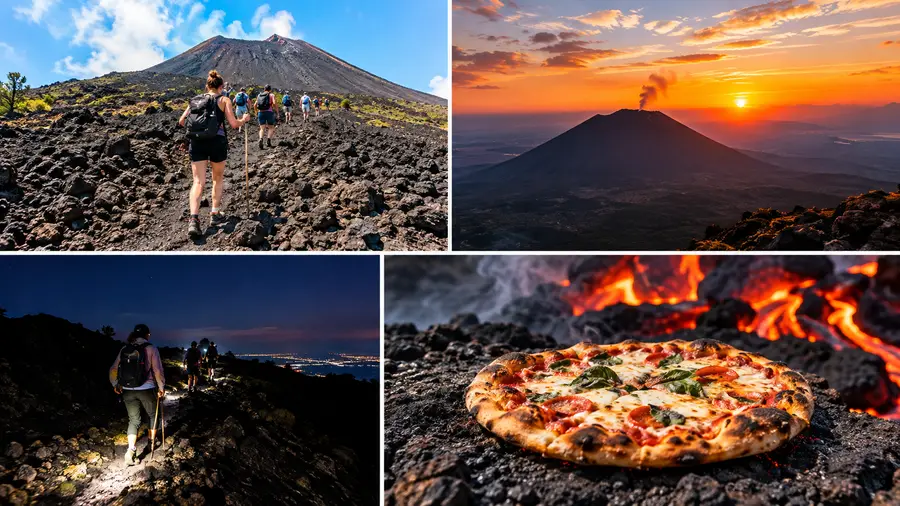
The transition from dusk to full night happens remarkably fast near the equator. One minute you are staring at a pink horizon, and twenty minutes later you are standing in total darkness at 7,500 feet. This marks the beginning of the pacaya volcano night hike, and it requires a completely different mindset than the walk up.
The ground beneath you is broken basalt, loose shale, and deep fields of black volcanic grit known locally as arena negra. Walking across this stuff during the day is easy because you can spot the loose ledges. In the dark, depth perception disappears entirely. Every step requires a bit of trust and a solid pair of trail shoes with aggressive rubber treads.
Guide teams lead hikers down in single file, each beam of light catching the swirling dust kicked up by the person in front. Descending through the loose scree feels a bit like slow-motion skiing. You sink mid-ankle into the soft, pulverized rock with every stride, sliding forward a foot or two before coming to a stop. It feels strange at first, but once you lean your weight slightly back and find the rhythm, it cuts the descent time in half.
Note: Do not rely on your smartphone flashlight for the descent. The trail has uneven rocky drop-offs, and holding a phone leaves you without hands to break your fall if you slip in loose sand.
Pause halfway down and switch off your lamp for thirty seconds. Down in the valley, the sprawling grid of Guatemala City twinkles through the mountain pass, a massive ocean of yellow lights framed by dark volcanic silhouettes. Overhead, far from the light pollution of the capital, the stars punch through the thin atmosphere with incredible clarity. If you listen closely, you might hear the low, thunderous rumble of Fuego venting pressure across the valley floor.
Book your pacaya volcano hike experience:
Horses, Kids, and Overnight Stays on the Volcano
From the second you step out of the van at the trail kiosk in San Francisco de Sales, you will encounter the horse handlers. Local men and young boys lead saddled horses behind the tour groups, patiently waiting for tired travelers to surrender to the climb. They call them "volcano taxis," and they take their trade seriously.
Having a pacaya volcano hike horses available system is a genuine lifesaver for people carrying old knee injuries or travelers who find themselves unexpectedly wiped out by the elevation. You do not have to commit at the bottom. The handlers follow along for the first forty minutes of the steep switchbacks, politely asking if you want a taxi every time you stop to gasp for air. Negotiating a ride up typically runs between Q200 and Q250 (around $26 to $32), with the handler walking alongside holding the reins the entire way.
The horses stop where the lava fields begin. The hardened, brittle rock cuts into equine hooves, so the final traverse to the hot vents must be done on your own two feet regardless of how you got up the ridge.
If you are planning a pacaya volcano hike with kids, the horses turn an otherwise tearful slog into an unforgettable adventure. Children seven and older who spend time outdoors can usually manage the hike on foot, provided you take frequent breathers. For younger kids, booking a horse for the uphill stretch makes the trip entirely practical and keeps the whole family moving without meltdowns.
| Tour Style | Departure Time | Trail Temperature | Crowd Levels | Key Highlight |
|---|---|---|---|---|
| Morning Tour | 6:00 AM - 8:00 AM | Hot and sunny (65°F - 80°F) | High (multiple bus tours) | Clear morning views of Agua |
| Sunset Hike | 1:30 PM - 2:00 PM | Mild to cool (50°F - 70°F) | Moderate to low | Golden hour lighting & pizza |
| Overnight Camp | 2:00 PM (Day 1) | Cold night (38°F - 48°F) | Extremely low | Star gazing & sunrise caldera |
A few intrepid hikers skip the return minibus entirely and opt for a pacaya volcano hike overnight trip. Local outfitters provide heavy-duty tents and sleeping bags rated for mountain winds. Camping sits just below the crater ridge in designated sheltered pockets. Sleeping on an active volcanic slope while feeling the subtle tremors under your sleeping pad is wild, though the wind can whip across the exposed caldera with enough fury to keep light sleepers awake until dawn.
Practical Prep: Timing, Gear, and Trail Logistics
Packing for an afternoon trip requires more thought than a casual daytime walk. You leave Antigua in short sleeves under warm sunshine, but by the time you are eating dinner near the vents, the temperature will drop into the fifties or lower. Dressing in adaptable layers is non-negotiable.
Check our detailed guide on what to wear on the Pacaya volcano hike before you pull your clothes together. The key is packing items you can easily strip off and stash as your body heat spikes on the way up, then pull back on the minute you stop moving on the windy ridge.
- Headlamp with fresh batteries: Essential for the scree run descent, keeping both hands free for balance.
- Sturdy trail shoes or boots: Basalt rock shreds thin fashion sneakers, and loose ash easily fills low-cut footwear.
- Windbreaker or lightweight fleece: The winds sweeping across the plateau after sundown carry a sharp, chilling bite.
- Small bills in Quetzales: Needed for park entry fees (Q100 per foreigner), walking sticks (Q5), snacks, and horse rides.
- Two liters of water: The volcanic air is dry, and the steady climb dehydrates you faster than you realize.
The logistical rhythm of the trip is straightforward. Knowing what happens at each stage takes the anxiety out of heading up an active volcano after midday.
- 1:30 PM: Pickup from your hostel or hotel in Antigua for the hour-and-a-half van journey.
- 3:00 PM: Arrive at the visitor center in San Vicente Pacaya, pay park fees, and meet your local village guide.
- 4:45 PM: Reach the main lava plateau, inspect old crust flows, and visit the geothermal vents.
- 5:30 PM: Pizza dinner cooked on the hot rocks while watching the sunset paint the caldera.
- 6:15 PM: Turn on headlamps and begin the rapid descent down the black sand switchbacks.
- 7:30 PM: Board the transport back at the trailhead base.
- 9:00 PM: Drop-off back at the central plaza in Antigua, just in time for a cold beer.
Frequently Asked Questions about pacaya volcano sunset hike
Can you see glowing red lava on the sunset hike right now?
Surface flows change every week based on volcanic activity. While Pacaya frequently has visible molten rock during active eruptive phases, there are long periods where the lava is entirely subterranean, leaving superheated steam vents and glowing cracks rather than rolling rivers of molten magma.
Can I just use my phone flashlight for the night walk down?
Honestly, it is a bad idea. The volcanic scree trail is slippery and filled with uneven drop-offs where you might need to scramble or steady yourself. A dedicated headlamp keeps your hands completely free to catch your balance if you slide.
Do I have to order the lava pizza before I start the hike?
Yes. Chef David Garcia prepares his dough, toppings, and metal cookware in the village beforehand based on confirmed bookings. If you do not arrange the pizza through your tour company or direct reservation ahead of time, he will not have supplies waiting for you on the ridge.
Quick Reference
- Park entrance fee: 100 Quetzales (cash only)
- Average trail elevation gain: 1,200 feet
- Antigua shuttle drive time: 75 to 90 minutes each way
- Horse taxi rental: Q200 - Q250 one way
- Return arrival time in Antigua: roughly 8:30 to 9:00 PM
Book your pacaya volcano hike experience:
The Bottom Line
If you only have time to climb one volcano while staying around Antigua, Pacaya offers the biggest sensory reward for the least amount of suffering. While Acatenango demands two grueling days of uphill pain, an afternoon run up Pacaya gives you smoking vents, staggering views of neighboring peaks, and hot food cooked by the earth itself, all wrapped up before bedtime. Book the late van, tuck a headlamp into your daypack, and make sure you grab a slice on the ridge.
Read more about pacaya volcano hike.